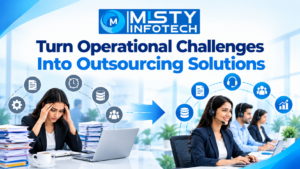
Outsourcing That Helps Businesses Scale
Business growth brings new opportunities, but it also creates additional operational demands. As a company gains customers, expands its services, or enters new markets, its workload often increases. Managing data, processing documents, maintaining records, and handling administrative tasks can become more challenging alongside core business responsibilities.
Outsourcing offers businesses a practical way to manage selected activities through external service providers. When planned carefully, it can help organizations handle changing workloads, improve process consistency, and focus internal resources on important business priorities.
In this blog, we explore how outsourcing can support business growth, which services companies can outsource, and what to consider when choosing an outsourcing partner.
What Is Business Outsourcing?
Business outsourcing involves assigning specific activities or processes to an external service provider instead of managing every task internally.
Companies may outsource routine or specialized functions depending on their requirements, available resources, and business objectives.
Common outsourcing services include:
Data entry and data processing
Document conversion and digitization
Database updating and maintenance
Data verification and validation
Back-office support
Administrative processing
Customer support services
Voice and non-voice BPO services
Information management
Outsourcing does not require a business to transfer all its operations to an external provider. Companies can select individual processes that are suitable for external support.
Why Outsourcing Matters as Businesses Grow
A process that works well for a small operation may become difficult to manage when the volume of work increases.
For example, a growing e-commerce company may need to maintain more product listings, update inventory records, process additional orders, and manage a larger customer database.
Outsourcing suitable activities can help the company manage these requirements without requiring its internal team to perform every routine task.
1. Manage Increasing Workloads
As businesses grow, the volume of documents, customer records, transactions, and administrative work may increase.
Outsourcing can provide additional capacity for selected activities, subject to the service provider’s resources and the agreed scope of work.
This can be particularly useful during seasonal demand, business expansion, or periods when internal teams face temporary workload increases.
2. Allow Internal Teams to Focus on Core Activities
Employees often spend time on repetitive tasks such as updating spreadsheets, entering information, organizing documents, and maintaining records.
When suitable activities are outsourced, internal teams may have more time to focus on sales, customer relationships, product development, strategic planning, and other core responsibilities.
The key is to identify tasks that can be transferred without compromising quality, control, or business requirements.
3. Support More Consistent Processes
Outsourcing arrangements can establish defined workflows, responsibilities, deadlines, and quality-control procedures.
For example, a data-processing project may follow a standardized process for receiving source files, entering information, verifying records, checking quality, and delivering completed work.
Clear procedures help both the business and its service provider understand the expected results.
4. Provide Access to Specialized Capabilities
Some business activities require particular tools, technical knowledge, or established processing procedures.
Depending on the provider, outsourcing can give a company access to capabilities that it may not want to develop entirely in-house.
Before engaging a provider, businesses should confirm its actual experience, technical capabilities, quality-control methods, and ability to meet the project requirements.
5. Help Businesses Manage Costs
Maintaining every business function internally can involve staffing, training, software, equipment, and management expenses.
Outsourcing may provide an alternative for selected activities, but it does not automatically guarantee savings.
Businesses should compare the complete cost of outsourcing with their internal operating costs, including provider fees, communication, oversight, quality checks, and any additional technology requirements.
Business Processes That Can Be Outsourced
Different companies have different needs. The following services are commonly considered for outsourcing.
Data Entry Services
Data entry involves transferring information from documents, forms, spreadsheets, and other sources into digital systems.
Common activities include customer data entry, product data entry, form processing, spreadsheet updates, and record maintenance.
Accurate data entry helps businesses maintain organized information for operational use.
Data Processing Services
Data processing involves organizing, formatting, categorizing, and validating information.
Depending on the project, it may include data cleaning, data extraction, record reconciliation, information formatting, and database updating.
These activities can help businesses prepare information for reporting and further analysis.
Document Conversion Services
Businesses often receive information in formats that are not convenient for editing or analysis.
Document conversion services may include PDF to Word, PDF to Excel, JPG to DOC, image-to-text conversion, and scanned document digitization.
The converted output should be reviewed for missing information, incorrect values, and formatting issues.
Back-Office Support
Back-office outsourcing can support internal activities such as document handling, administrative processing, database maintenance, and information management.
These services can help businesses organize routine operations while keeping appropriate oversight of their processes.
Voice and Non-Voice BPO Services
Depending on the provider’s capabilities and agreed scope, businesses may outsource selected customer communication and support activities.
Voice services may include inbound enquiries and appointment scheduling. Non-voice services may include email support, chat support, data processing, and document management.
Any customer communication should follow applicable consent, privacy, and regulatory requirements.
How Outsourcing Can Support Business Scalability
Scalability means a business can adapt its operations as demand and requirements change.
Outsourcing can contribute to scalability when the selected services, capacity, and workflows match the company’s needs.
For example, a business may begin by outsourcing document conversion and data entry. As its requirements develop, it may consider adding database maintenance or other back-office activities, provided the provider can support them.
A scalable outsourcing arrangement should include:
Clearly defined service responsibilities
Documented operating procedures
Agreed quality standards
Appropriate capacity planning
Reliable communication channels
Secure information-handling practices
Regular performance reviews
Outsourcing can support growth, but business success also depends on demand, management, service quality, financial planning, and other factors.
Which Industries Can Benefit From Outsourcing?
Outsourcing can support a wide range of industries when services are selected according to their operational requirements.

E-Commerce and Retail
Product listings, inventory records, order information, and customer database maintenance.

Professional Services
Document processing, data entry, record maintenance, and administrative support.

Logistics and Distribution
Shipment records, inventory information, delivery documentation, and supplier data.

Education
Student records, registration forms, and administrative document processing.
Healthcare, insurance, real estate, manufacturing, and other sectors may also use outsourcing for suitable administrative and data-related processes. Sensitive information must be handled in accordance with applicable confidentiality and data-protection requirements.
How to Choose the Right Outsourcing Partner
Selecting an outsourcing provider requires more than comparing prices. Businesses should evaluate whether the provider can meet their specific operational needs.
Service Capabilities
Confirm that the provider offers the required services and can handle the expected volume and complexity of work.
Quality Assurance
Ask how completed work is checked, how errors are corrected, and how performance is measured.
Data Security
Establish clear rules for information access, file transfer, storage, confidentiality, retention, and deletion.
Communication and Reporting
Agree on responsibilities, points of contact, reporting frequency, and procedures for resolving issues.
Service Terms and Costs
Review deliverables, turnaround times, pricing, service limits, and any additional charges before beginning the engagement.
Flexibility
Determine whether the provider can accommodate reasonable changes in workload or project requirements and what conditions apply.
A clear service agreement helps establish expectations and reduces misunderstandings.
Outsourcing With Misty Infotech
Misty Infotech works in the data entry, BPO, and data-processing business area. Businesses exploring outsourcing should first identify the specific processes they need support with and confirm the provider’s service capabilities, commercial terms, quality procedures, and data-security arrangements.
Misty Infotech also offers a Business Franchise Opportunity for entrepreneurs, business owners, and investors interested in data entry, BPO, data processing, and related business operations.
Depending on the approved business model, franchise partners may receive project-related guidance, technical assistance, operational support, and business process guidance. Interested parties should confirm the approved scope and terms before making a business commitment.
Important Business Disclaimer
This is a business franchise opportunity for entrepreneurs, business owners, and investors. It is not a job, work-from-home opportunity, freelance work, internship, or employment offer.
Conclusion
Outsourcing that helps businesses scale is about choosing the right activities, defining clear processes, and working with a provider that can meet agreed requirements.
Data entry, data processing, document conversion, database maintenance, and back-office support are examples of activities that may be suitable for outsourcing.
With appropriate planning, quality control, secure information handling, and regular performance reviews, outsourcing can help businesses manage workloads and direct more attention toward their core objectives.